In the age of experiential tourism, the real luxury is not marble or service, but authenticity. Here’s how to bring yours out.
Historic houses do not sell rooms. They sell belonging to a place, an era, a way of life .. Yet, too many properties communicate in a generic way, merely showing “ancient walls” and “manicured gardens”-the same claims used by all competitors.
The result? Commodity. Guests who choose based on price. Missed opportunities.
A mansion is not just architecture: it is the fruit of the work of those who keep it alive every day-from the gardener who knows every secret of the park to the village baker who brings back the scents of tradition every morning. It is the synergy between the history of the walls and the stories of the people who inhabit them.
The heritage marketing is the answer: not a simple rebranding, but a strategic process For:
- Identify the unique essence of the dwelling (history, architecture, traditions).
- Translating it into contemporary languages (from website to guest experiences).
- Monetize it through premium pricing, partnerships and loyalty.
3 Reasons why a strong identity pays back the investment
1. Justify the price (and attract the right audience)
Weak branding forces competition on platforms such as Booking.com, where whoever lowers standards the most wins. A clear identity – backed by consistent storytelling and evocative imagery – shifts the battle to the level of emotional value, enabling:
- Increase direct bookings (less commissions).
- Attracting guests willing to pay for exclusivity.
2. Turns guests into ambassadors
A dwelling with a recognizable history inspires spontaneous content (social, reviews, word of mouth),especially when the experience includes stories about local people, nearby artisan activities, and the traditions that make the area unique. Hospitality that focuses on humanity and connection with nature makes every visit a story to be told.
Example:
- Dedicated hashtags (#VillaXExperience) instead of generic #Toscana.
- Reviews citing unique details (“I felt like an 18th-century nobleman”) instead of “Clean place.”
3. Opens doors to prestigious collaborations
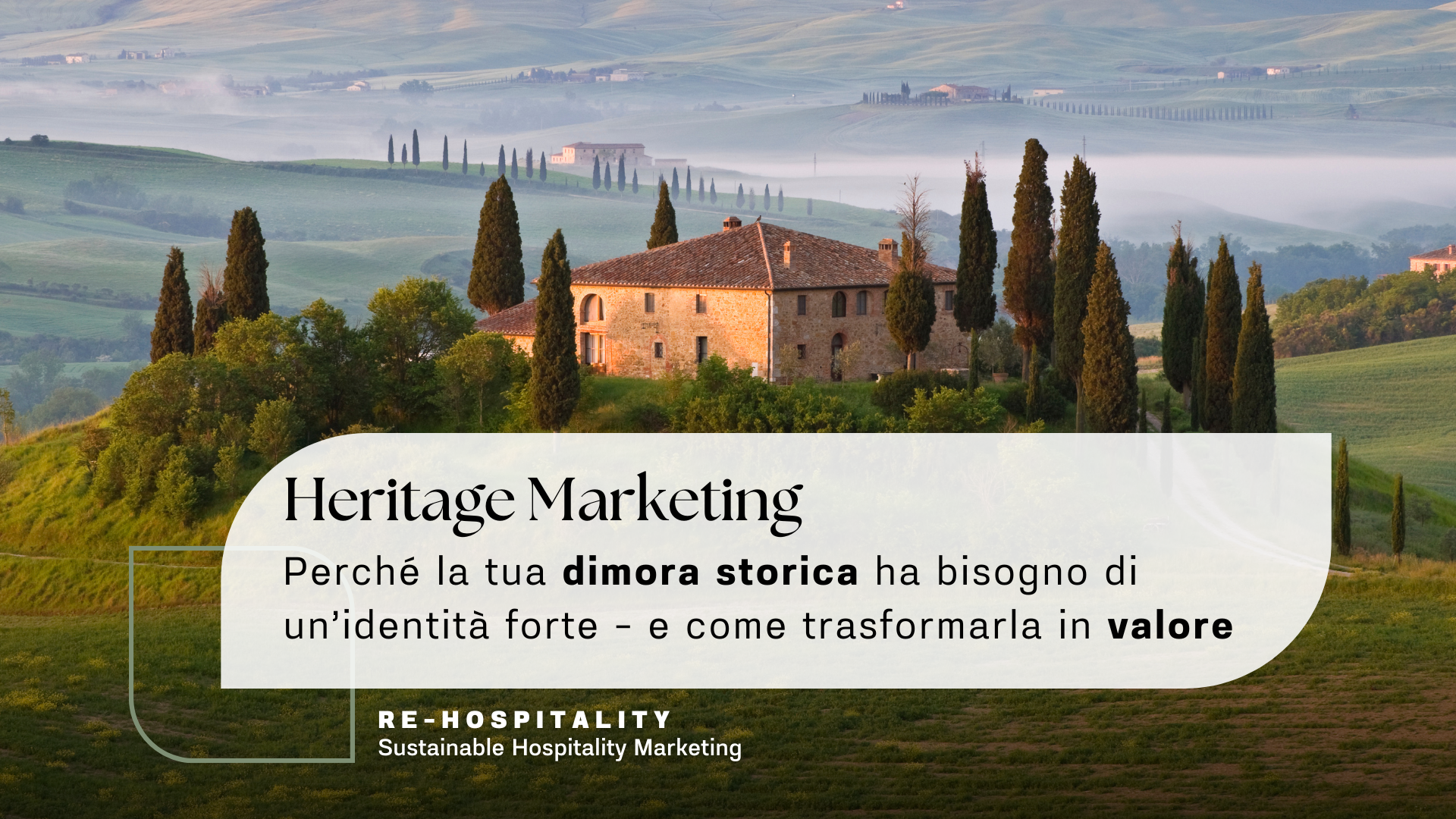
Today, more than ever, the natural beauty surrounding the mansion and its connections to the local landscape become appealing elements for brands and creatives. The charm of a row of cypress trees, an ancient vineyard, a centuries-old forest are unique settings that no one can replicate
Luxury brands, media, artists seek places with a soul For:
- Photo shoots.
- Thematic events (product launches, artist residencies).
- Limited editions (perfume lines, fabrics inspired by the mansion).
How to apply it? The Re-Hospitality Method
1. Field research and observation We do not limit ourselves to the archives: we enter the places, breathe in their atmosphere, meet the people who cherish their memories-such as the village elders, the families and staff who have experienced every corner of the dwelling, and of course the local producers who keep the traditions alive.
2. Defining the tone of voice We study the unique personality of the dwelling and translate it into a consistent and distinctive language: elegant, romantic, authentic rural, exciting. A tone that knows how to make guests feel welcomed even before they arrive.
3. Cross-media planning We plan a visual and sensory narrative that combines photo shoots capable of capturing the soul of the place, video content, and custom design details-such as guest kits with hand-drawn maps, handcrafted soaps, or small items that tell the story of the estate.
Your dwelling already has everything the market wants: authenticity, legacy, character. But also a heritage of nature and people who make it come alive. The heritage marketing is not about inventing something: it is about bringing out what is already there – stories, emotions, landscapes – and making them usable for those who dream of experiencing them, even if only for one night.